
Trap-Neuter-Return
A program for the future!
The Capture, Sterilization, and Release (CSR) program, also abbreviated as TNR (Trap-Neuter-Return) in English, is an approach used to ethically and sustainably manage stray cat overpopulation.
Our SPA and citizens/volunteers work in collaboration with local authorities, municipal officials, and other partners to effectively implement CSR programs in the future and ensure responsible management of stray cat populations.
Here is a general overview of the program that will be implemented at the SPA des Cantons:
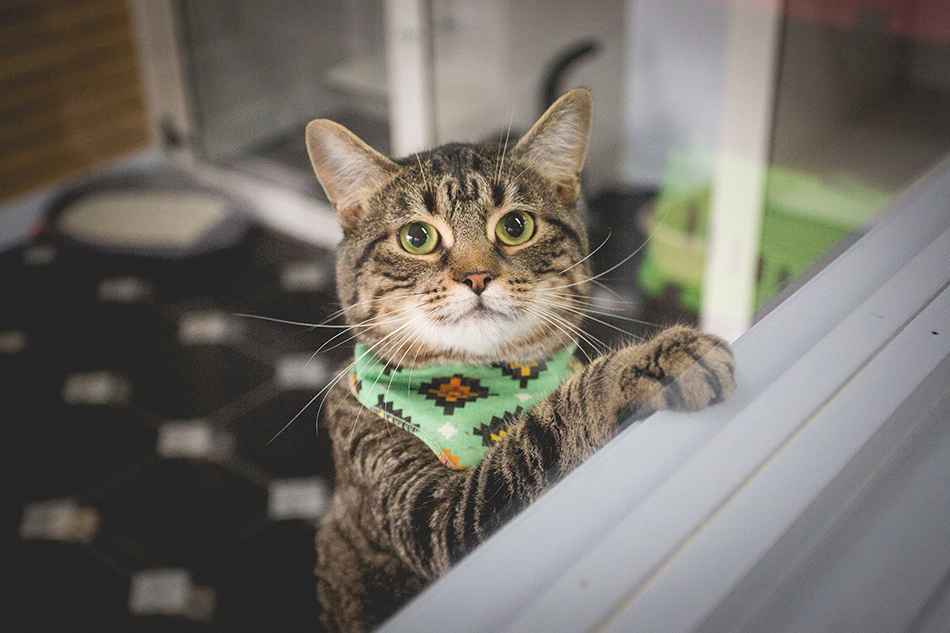
1. Capture:
Stray cats are captured by citizens/volunteers, as has been the case for several years, who bring them to our premises for care.
2. Waiting Period:
Cats taken into care are posted on our website and Facebook page in the hope of reuniting them with their owners;
This period is called the “holding period,” and it varies from city to city, generally between two and five days.
3. Veterinary Examination and Medical Care :
During or immediately after the waiting period, cats are examined and evaluated by our veterinary team;
They receive appropriate care, such as vaccinations (contagious diseases and rabies), parasite treatments, and care for existing injuries or illnesses;
Based on age, health status, physical condition, and behavior, we select cats that are good candidates for CSR:
– Neither too young nor too old;
– Neither emaciated nor obese;
– Not declawed;
– Absence of disease that compromises life expectancy;
– Low to moderate aggressive behavior or avoidance of humans;
Cats with good behavior, who seek human contact, and whose general health is good enough will go for adoption and not for CSR;
Cats with good behavior whose health requires more attention will go to partner shelters;
Cats whose behavior endangers the safety of the staff caring for them or whose health condition jeopardizes the animal’s immediate survival may be euthanized.
4. Sterilization:
Unclaimed cats selected for the CSR program are sterilized by our veterinary team;
The tip of the left ear is clipped, which will make it easy to identify its status as a sterilized stray cat.
5. Release:
After surgery, sterilized cats are released back to where they were captured, where they can continue to live as members of the local feline population;
It is important to avoid feeding stray cats; the food source attracts more than one cat and creates territorial, health, and reproduction issues.
6. Collaboration with Local Authorities :
Our SPA and citizens/volunteers work in collaboration with local authorities, municipal officials, and other partners to effectively implement CSR programs in the future and ensure responsible management of stray cat populations.
In summary, the Capture, Sterilization, and Release program is an ethical and effective approach to managing stray cat overpopulation, promoting harmonious coexistence between cats and human communities.
Many stray cats occupying the same territory generally do so because they are fed by humans. Feeding stray cats is a bad idea because it encourages them to gather, and nature being what it is, unsterilized cats will eventually reproduce and thus contribute to the feline overpopulation problem.
It must be understood that a cat is a predator, and its instinct will allow it to fend for itself for food without human help, just like a skunk or a raccoon.